Forgiveness and Repentance
We Begin with Scripture
When drawing out wisdom from Scripture, it's temping to find passages that align with a preconceived view. To avoid errors from this method, I find it prudent to select all Scripture passages associated with a specific topic then review them holistically. Below are many of the important Biblical passages about forgiveness and repentance:
If we confess our sins, he is faithful and just to forgive us our sins and to cleanse us from all unrighteousness.
as far as the east is from the west, so far does he remove our transgressions from us.
I acknowledged my sin to you, and I did not cover my iniquity; I said, “I will confess my transgressions to the LORD,” and you forgave the iniquity of my sin. Selah
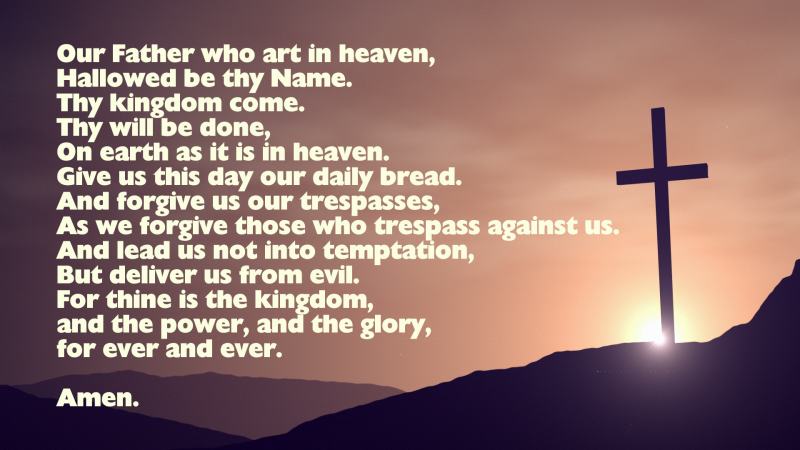
The LORD's prayer, specifically verses 12 and 14-15:
and forgive us our debts, as we also have forgiven our debtors.
For if you forgive others their trespasses, your heavenly Father will also forgive you, but if you do not forgive others their trespasses, neither will your Father forgive your trespasses.
Then Peter came up and said to him, “Lord, how often will my brother sin against me, and I forgive him? As many as seven times?” Jesus said to him, “I do not say to you seven times, but seventy-seven times.
Pay attention to yourselves! If your brother sins, rebuke him, and if he repents, forgive him, and if he sins against you seven times in the day, and turns to you seven times, saying, ‘I repent,’ you must forgive him.”
bearing with one another and, if one has a complaint against another, forgiving each other; as the Lord has forgiven you, so you also must forgive.
The parable of the unforgiving servant:
“Therefore the kingdom of heaven may be compared to a king who wished to settle accounts with his servants. When he began to settle, one was brought to him who owed him ten thousand talents. And since he could not pay, his master ordered him to be sold, with his wife and children and all that he had, and payment to be made. So the servant fell on his knees, imploring him, ‘Have patience with me, and I will pay you everything.’And out of pity for him, the master of that servant released him and forgave him the debt. But when that same servant went out, he found one of his fellow servants who owed him a hundred denarii, and seizing him, he began to choke him, saying, ‘Pay what you owe.’ So his fellow servant fell down and pleaded with him, ‘Have patience with me, and I will pay you.’ He refused and went and put him in prison until he should pay the debt. When his fellow servants saw what had taken place, they were greatly distressed, and they went and reported to their master all that had taken place. Then his master summoned him and said to him, ‘You wicked servant! I forgave you all that debt because you pleaded with me. And should not you have had mercy on your fellow servant, as I had mercy on you?’ And in anger his master delivered him to the jailers, until he should pay all his debt. So also my heavenly Father will do to every one of you, if you do not forgive your brother from your heart.”
The entire parable of the prodigal son (text omitted).
And Jesus said, “Father, forgive them, for they know not what they do.” And they cast lots to divide his garments.
And Peter said to them, “Repent and be baptized every one of you in the name of Jesus Christ for the forgiveness of your sins, and you will receive the gift of the Holy Spirit.
Whoever conceals his transgressions will not prosper, but he who confesses and forsakes them will obtain mercy.
And whenever you stand praying, forgive, if you have anything against anyone, so that your Father also who is in heaven may forgive you your trespasses.”
For judgment is without mercy to one who has shown no mercy. Mercy triumphs over judgment.
So if you are offering your gift at the altar and there remember that your brother has something against you, leave your gift there before the altar and go. First be reconciled to your brother, and then come and offer your gift.
And falling to his knees he cried out with a loud voice, “Lord, do not hold this sin against them.” And when he had said this, he fell asleep.
The entire narrative of Joseph and his brothers in Egypt (text omitted).
For godly grief produces a repentance that leads to salvation without regret, whereas worldly grief produces death.
The Definitions
The more conversations I have, the more I realize people don't really care about the definition of words, and would rather use them loosely to fit their particular agenda at that moment. Whether this is malicious or accidental, nailing down definitions allows two parties to communicate instead of talking past each other, eliminating needless frustration or fruitless discussion. Instead of just listing dictionary definitions, I'm going to try to define these key words with concepts found in Scripture. The definitions listed below will then be used in the rest of this post.
Offense
Scripture, depending on the translation, uses the terms transgression, wrongdoing, sin and others semi-interchangeably. I'm choosing to primarily use the term "offense" in this blog. An offense is an immoral action taken by one party (the wrongdoer) which negatively affects another party (the victim).
Debt
After any offense, a moral obligation to repay the victim by the wrongdoer is incurred. We refer to this obligation as a debt. It is best not to think of debt in this context as monetary, although in some cases it can be.
Confession
Confession is the act of admitting and declaring an offense that that one committed as immoral. Confession can be done in a public setting, to an individual or small group, as well as only to God. Interestingly, it is also possible to confess sins to the LORD, who is omniscient. This suggests that confession is not only used to inform the other party of the wrongdoing, but also provides a deeper or secondary function for the confessor.
Restitution
Every debt needs to be repaid. Restitution is the act of repaying a moral debt in order to restore a relationship between a wrongdoer and victim. Restitution may have multiple components, such as a monetary cost to repair or replace something as well as time spent to modify or install a thing. In some cases, restitution is simply not possible. There is no way to replace or repair something irreplaceable. For example, as Christians we know the debt incurred by humanity's sin is too large for restitution to ever be made through mortal means.
Repentance
Every offense, whether caused on purpose or by negligence (i.e: accidentally), has a belief behind it. The beliefs in the heart drive action externally. Repentance, in the proper Christian conception, involves a change of heart and mind. The process of modifying one's own beliefs about a subject. A common error people make is repentance is not just sorrow for one's actions. It is a reversal and turning of the heart for what caused the offense in the first place. It is possible to have sorrow without having repentance.
Apology
My view is that apology and confession are the same, with the caveat that an apology is only possible to be performed between humans -- Human-only confession. As with confession, the purpose of an apology is to express regret and the understanding that the wrongdoer has repented. This helps the victim and makes it easier to forgive the wrongdoer.
Forgiveness
Finally, forgiveness is the act of releasing the wrongdoer from the debt caused by the original offense -- an erasure from the record books of the cost of wrongdoing. It's only after forgiveness that reconciliation can be achieved and the original relationship between victim and wrongdoer restored. Forgiveness can't happen twice or be taken back. If a victim insisted on repayment of a debt after forgiveness was offered and accepted, it would call into question how genuine the forgiveness was.
Forgiveness between Man and God
Forgiveness and repentance between Man and God only go one way each. Man sins, which is an offense against God. As a result, a debt is created, owed to God by Man. Unless you're a Universalist (which I can't help with), you must acknowledge that although salvation is a free gift from God, you still must accept it to receive it. Those who do not repent are not saved. God only forgives the repentant sinner.
Forgiveness between humans
Numerous Bible verses above command us to forgive each other. Based on these commands from Christ, it must also be possible for forgiveness to be between humans as well. We ought to take these commands seriously as Christians and live in a way where we are ready to forgive those who do us wrong. The parable of the unforgiving servant is especially sobering, considering Jesus calls forgiveness a necessary requirement for salvation.
It's useful to distinguish between divine forgiveness and human forgiveness because the mechanics of each are different. God's forgiveness is entirely predictable. He always keeps his promises. Humans on the other hand are messier, and forgiveness rarely looks the same each time.
Additionally, When harming another human, a wrongdoer necessarily also commits sin against God. In the same way that harming someone's son or daughter would simultaneously be a sin against the child and the parent, wronging another human also violates God's law, and this infraction carries a debt owed to both God and man.
Views on forgiveness in relation to repentance
Generally there are three (3) views on forgiveness in the Christian conception of the idea.
Unconditional Forgiveness
The first, called Unconditional Forgiveness, is the view that forgiveness should be given freely and without the condition that the wrongdoer ever repents. Advocates of this view generally point to Jesus' words on the cross: "Forgive them father, for they know not know what they do", which is also echoed by Stephen as he is being killed.
Unconditionalists also argue that if forgiveness is not issued, a victim will harbor negative feelings by holding a grudge against the wrongdoer. Ultimately, these feelings will only serve to cause additional harm to the victim, and by forgiving, the victim is allowed to be free, removed of the burden of holding a grudge.
Morally Conditional Forgiveness
The second is the view that repentance morally should be present before forgiveness is issued and the debt is erased. Supporters of this position generally do not deny the command to forgive, but believe the commands to forgive implicitly or explicitly suggest that repentance should be present before forgiveness is offered. It's common to refer to passages like Luke 17:3-4 as evidence that some of these commands to forgive only apply if the wrongdoer repents, and so it must be consistently applied that all of the commands to forgive implicitly or explicitly mean this.
When Unconditionalists point to Jesus' words on the cross to forgive those who crucified him, Conditionalists will point to the fact that divine forgiveness works differently than human forgiveness, and that God can see repentance in the heart without outward expression, and Jesus knew their hearts. For human forgiveness, a public expression of repentance (apology) is generally required to help the victim know the wrongdoer is truly repentant before forgiving them.
Definitionally Conditional Forgiveness
Proponents of this view assert that repentance is a necessary precondition of forgiveness, i.e: it must happen before forgiveness can even occur. Given this claim, it makes complete sense that some Scripture passages neglect to mention repentance when dealing with forgiveness. To make a practical example, I might tell someone I'm "getting into my car and driving over now" or I might just say I'm "driving over now". Since everyone knows "getting into my car" is a precondition of driving somewhere, it is redundant to even mention it. Likewise with forgiveness, in this view it's assumed that when Jesus mentions forgiveness in the Lord's prayer, repentance is obviously part of the deal, but it's just not mentioned because the Lord's prayer is not a theologically exhaustive doctrinal statement on forgiveness but a short prayer meant to be memorized and recalled during many of life's situations.
Components of an effective apology
Regardless of your view on the above, it is a good practice to apologize if the need arises. The main goal of a good apology is to demonstrate and convey repentance. Not everyone is a proponent of unconditional forgiveness and willing to just let everything go. Recall that repentance, properly understood, is a change of heart and mind. Often times sorrow accompanies repentance, but being sorry is not the same thing as being repentant. Most apologies start something like, "I'm sorry that..." While this is a good start, it's easier to demonstrate repentance with action instead of just words. A truly repentant wrongdoer may attempt to make restitution, even partially if that's all they can do.
Sometimes you'll hear sentences that start with "I'm sorry that you..." or "I'm sorry that I couldn't..." These are excuses, not apologies and they convey no repentance/change of heart in the wrongdoer. Nobody is under obligation to accept these kind of faux-apologies.
When a Christian receives a genuine apology, there are two good rules of thumb:
- Forgive immediately. Do not delay on obeying God's command to forgive your brother.
- Do not minimize or downplay the apology. We often say that something is no big deal even when it is to us. Let a person apologize and take it seriously.
Conclusion
This topic is fundamental to how we live our lives as Christians. Unfortunately, we don't spend enough time covering it. It seems to be one of those basics that everyone should revisit, even if they think they already know it -- because it seems like a lot of people don't.