
Foolish Words: Transparency as Vice not Virtue
Transparency vs Truth
This week has been difficult for me. I nearly lost my job due to my own carelessness with the words I chose to say. In this post I'll be reflecting on the experience to prevent future occurrences. As they say, never let a good trial go to waste.
The tongue also is a fire, a world of evil among the parts of the body. It corrupts the whole body, sets the whole course of one’s life on fire, and is itself set on fire by hell.

James 3:6
It is not what goes into the mouth that defiles a person, but what comes out of the mouth; this defiles a person.

Matthew 15:11
The elephant in the room of my life has been a tendency toward careless words. I just keep making the same mistake in regards to transparency versus truth. Truth is not transparency and transparency is not truth. Careless words can be perfectly truthful and an expression of transparency, but that does not make them good. In Proverbs, excessive speech is characterized as vice, regardless of its truthfulness.
Whoever guards his mouth preserves his life; he who opens wide his lips comes to ruin.

Proverbs 3:13
A fool vents all his feelings, But a wise man holds them back.

Proverbs 29:11
When words are many, transgression is not lacking, but whoever restrains his lips is prudent.

Proverbs 10:19
The category error here is treating truthfulness as though it automatically makes speech morally fitting. First, notice that Christians are indeed called to be truthful people:
Truthful lips endure forever, but a lying tongue is but for a moment.

Proverbs 12:19
Do not lie to one another, seeing that you have put off the old self with its practices

Colossians 3:9
But the error goes like this: Since truth is good, I assume I am obligated to speak whatever is true, and that if what I said was true, then speaking it was good. Unfortunately, this is simply incorrect. Instead, Paul commands us to speak truth for a specific purpose. Truth alone is not sufficient for a word to be rightly spoken. It must also be accompanied with love.
Rather, speaking the truth in love, we are to grow up in every way into him who is the head, into Christ

Ephesians 4:15
Let no corrupting talk come out of your mouths, but only such as is good for building up, as fits the occasion, that it may give grace to those who hear.

Ephesians 4:29
In contrast with foolish speech, wise speech is fitting for the situation and produces a desired effect.
A word fitly spoken is like apples of gold in a setting of silver.

Proverbs 25:11
To make an apt answer is a joy to a man, and a word in season, how good it is!

Proverbs 15:23
Part of the problem here is cultural. Our culture purports to value total honesty. It praises being one's genuine self, regardless of circumstance. It's even visible in slang phrases: "facts", "go off queen", "speak truth to power", "tell it like it is", and so forth. These cultural influences infiltrate our minds and do battle against biblical truths of restraint and caution of our speech. Not only must we hide more of God's word in our heart in order to defend ourselves, but we must notice and then weed out the sinful influences of our culture in our hearts.
Certain circles, especially the online right, also have issues with this tendency. After all, if someone is denying the reality of God's creation online, it's easy to call them retarded -- because maybe they are, right? We see this come out with right-wing slang like "based" as a praiseworthy attribute of being truthful and authentic without caring about what others think. While I think it's valuable to be able to speak truth in contexts where disapproval is all but guaranteed, biblically, such speech is not inherently virtuous.
Let your conversation be always full of grace, seasoned with salt, so that you may know how to answer everyone.

Colossians 4:6
Wisdom: Antidote to Folly
So how would someone who struggles persistently with sins of careless words begin to fix their issue? The first step is to get wisdom. Ask God to grant you wisdom.
Get wisdom; get insight; do not forget, and do not turn away from the words of my mouth. Do not forsake her, and she will keep you; love her, and she will guard you. The beginning of wisdom is this: Get wisdom, and whatever you get, get insight. Prize her highly, and she will exalt you; she will honor you if you embrace her.

Proverbs 4:5-8
If any of you lacks wisdom, let him ask God, who gives generously to all without reproach, and it will be given him.

James 1:5
Next, ask God to help you fix this sin specifically:
Do not be anxious about anything, but in everything by prayer and supplication with thanksgiving let your requests be made known to God.

Philippians 4:6
Write it down in your prayer requests list and pray for it regularly. If you don't have a prayer list, start one. I take notes on my phone but others may prefer a pen and paper journal. The parable of the persistent widow teaches us that repeated prayers for the same thing are not only allowed, but encouraged:
And he told them a parable to the effect that they ought always to pray and not lose heart. He said, “In a certain city there was a judge who neither feared God nor respected man. And there was a widow in that city who kept coming to him and saying, ‘Give me justice against my adversary.’ For a while he refused, but afterward he said to himself, ‘Though I neither fear God nor respect man, yet because this widow keeps bothering me, I will give her justice, so that she will not beat me down by her continual coming.’” And the Lord said, “Hear what the unrighteous judge says. And will not God give justice to his elect, who cry to him day and night? Will he delay long over them?

Luke 18:1-7
A Heart Problem
For out of the abundance of the heart the mouth speaks.

Matthew 12:34b
The heart is deceitful above all things, and desperately sick; who can understand it?

Jeremiah 17:9
Keep your heart with all vigilance, for from it flow the springs of life.

Proverbs 4:23
A different approach for removing this sin from your life is to fix the underlying heart issues. Each hurtful word comes from issues inside the heart. I can speculate that in heaven we won't have to guard our speech because every word will come from a pure heart. When we work on fixing the heart issues: greed, envy, discontentment, pride, etc. the evil language that comes from our mouths will be greatly diminished.
This doesn't remove the need to guard our tongues, but can lessen the negative impacts of loose speech. Everyone stumbles in this regard, so it's not a matter of if, but when.
For we all stumble in many ways. And if anyone does not stumble in what he says, he is a perfect man, able also to bridle his whole body.

James 3:2
Identifying Careless Words
Finally, brothers, whatever is true, whatever is honorable, whatever is just, whatever is pure, whatever is lovely, whatever is commendable, if there is any excellence, if there is anything worthy of praise, think about these things.

Philippians 4:8
There is one whose rash words are like sword thrusts, but the tongue of the wise brings healing.

Proverbs 12:18
Careless words come in all shapes and sizes. I'm writing down a few things I notice in myself, but this list is not exhaustive:
- Comparison of value or character between any individuals or groups of people
- Negative remarks disguised as humor
- Any kind of complaining
- Compulsive information oversharing
- Offering unsolicited opinions
- Sharing of private matters (gossip)
- Context dependent inappropriate information sharing (not reading the room)
The problem with these is they might seem fine at the time, unlike something more obvious like casual name-calling, they generally do not elicit a negative reaction from others when spoken. However, people will remember them and it will be used to color their perception of you. For those of us who prefer direct feedback, this can be hard to see when we've done it wrong.
A good name is to be chosen rather than great riches, and favor is better than silver or gold.


Proverbs 22:1
Know Thyself: Planning a Tactical Retreat
When we're content, it's easy and natural for the words that come out of our mouth to be friendly, pleasant, kind, and loving. Against such things there is no law. Careless words can still happen at any moment, but it's when we are unhappy that we are in the greatest danger. In these moments, our guard is weakened, leading us to say things we regret.
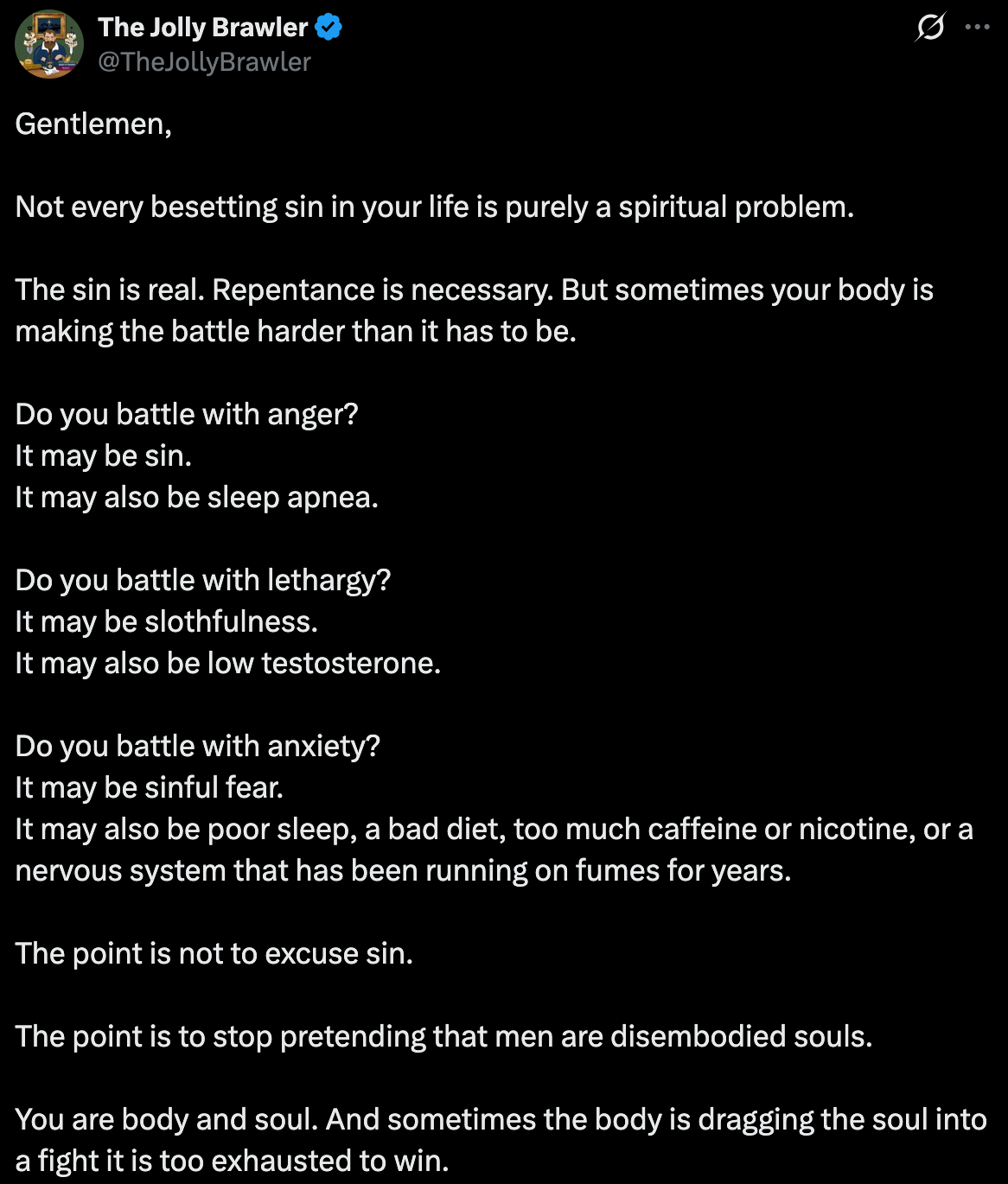
If you happen to have an agency frame/moment during a stressful time, ask yourself: "Am I frustrated, tired, sick, hungry, anxious, or angry? Am I in danger of saying something I'll regret?" If you happen to answer yes, not only is it a good idea in that moment to raise the guard on your tongue, it's probably a better idea to just get out of there entirely. Pick a different topic to talk about, excuse yourself to go to the bathroom, or just go home.
No temptation has overtaken you that is not common to man. God is faithful, and he will not let you be tempted beyond your ability, but with the temptation he will also provide the way of escape, that you may be able to endure it.

1 Corinthians 10:13
The other part of this equation is to understand that when around at least 1 other person, there is no such thing as "off". As long as someone is within earshot, the barrier between the heart and the mouth needs to be ON. Not even your wife, girlfriend (cough), or close friends should ever see you without a filter. Save the raw, unfiltered thoughts for God. If someone has a bad day, it's tempting to go hang out with friends and have someone to vent to. Unfortunately this leaves them vulnerable to speaking carelessly due to their negative emotional state. Sometimes the best place to be on bad days is at home. Go read your Bible and pray instead of going out. If you really need to go out, hit the gym. Alone.
The Contrarian Gambit
Another easy error to make is assuming everyone has the same communication style as your own. For me, my communication style tends toward direct and assertive. This offers me plenty of benefits but also major pitfalls to beware of. When two individuals with this direct/assertive communication style talk, the interaction is often characterized by polite disagreement and mutual respect. After enough back and forth with each side presenting their cases, a common understanding and shared knowledge can be agreed upon. When done well, both parties learn something and improve their understanding of the world.
Iron sharpens iron, and one man sharpens another.

Proverbs 27:17
The problem happens when a direct/assertive personality attempts to start this process with someone who is not interested in any kind of back-and-forth argumentation. This could be a communication style difference or just a lack of desire by the individual to enter into the arena of debate. This most often ends in frustration for both parties, with one's desire for debate left unfulfilled and the other tired of listening to inane opinions that were intended to spark some conversation.

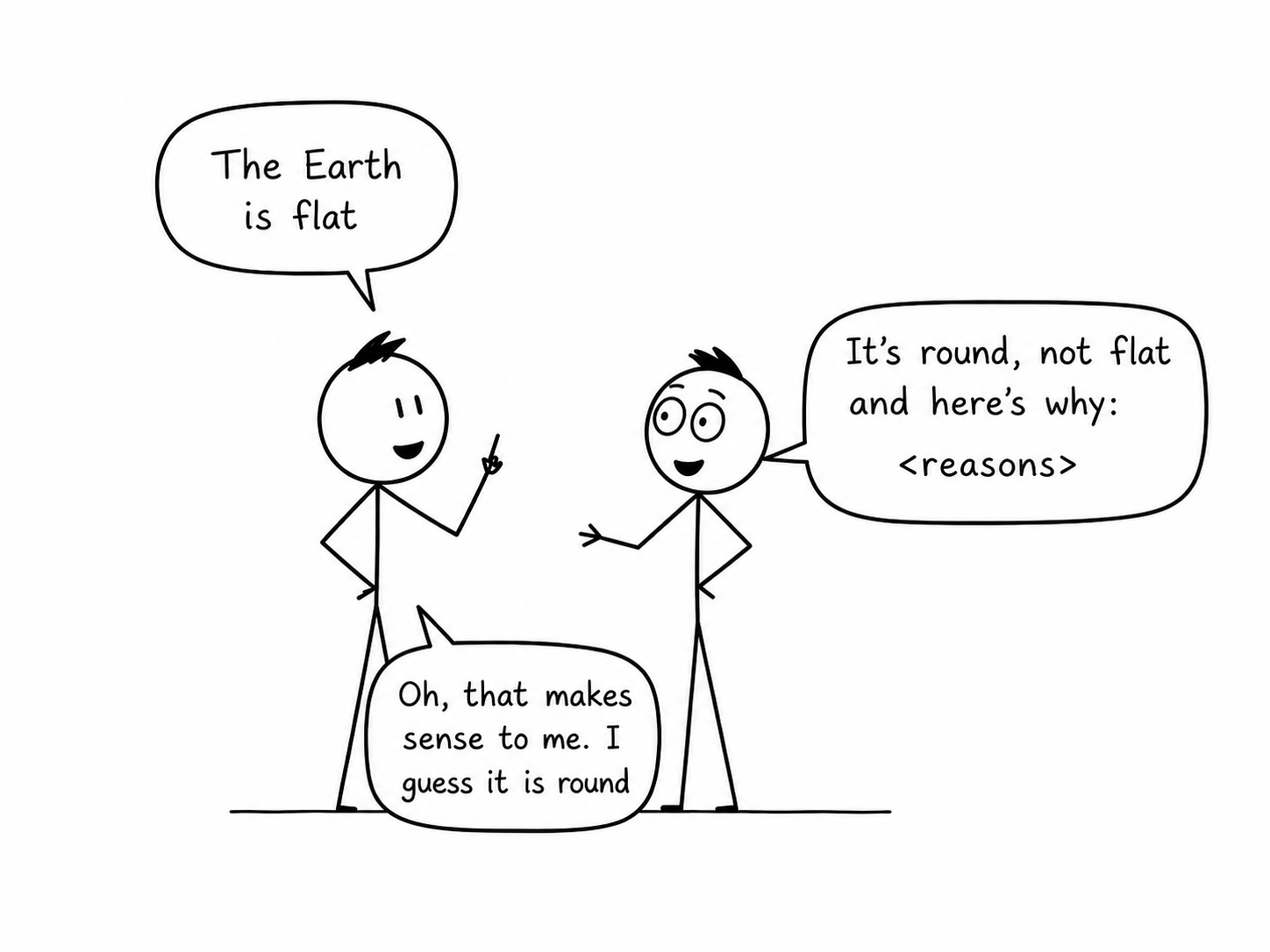
This could be a product of growing up in a family of all brothers, but I struggle interacting with passive communicators. I often mis-assume that when I get no response, they must not have understood me the first time and I attempt to restate the same opinion in a different way, usually causing even more unspoken frustration. I don't have a complete solution to this problem yet. Maybe it's simply best to directly ask the other person what their communication style is. If you're not sure if they want to enter a conversation about a specific topic, it might be better to just ask instead of assuming they want to talk about it.
It's important to note that these kind of verbal thrusts can be okay if the other person is armored and in the mood for some verbal sparring. If not, these sort of baited remarks are simply another category of careless words.
Sorry Goes a Long Way
Whoever conceals his transgressions will not prosper, but he who confesses and forsakes them will obtain mercy.

Proverbs 28:13
If we confess our sins, he is faithful and just to forgive us our sins and to cleanse us from all unrighteousness.

1 John 1:9
One of the best skills for any Christian to have is to be able to say sorry. Many a careless word has come and gone, but the relationship ultimately restored after a sincere apology. A genuine apology shouldn't just come from a desire for restoration, though that can be a favorable outcome, but instead from a place of contrition with the associated desire to change future behavior.
The sacrifices of God are a broken spirit; a broken and contrite heart, O God, you will not despise.

Psalm 51:17
More on this here, but this is a good template to use if you're not sure where to start:
I sinned against you when I said __________. I was wrong, and I understand that it hurt you. I am sorry and am asking for your forgiveness. I want to change, and where possible I want to make it right.
One of the admirable things we see in the narrative of David is his ability for righteous sorrow when confronted with his own sin. David also notes that sin against another is a sin against God. In this way, if we can't apologize to each other for some reason, we should still confess our sin to God for our careless words.
For I know my transgressions, and my sin is ever before me. Against you, you only, have I sinned and done what is evil in your sight, so that you may be justified in your words and blameless in your judgment.

Psalm 51:3-4
Finally, the good news is that even after we mess it all up, God is merciful to forgive:
The steadfast love of the Lord never ceases; his mercies never come to an end; they are new every morning; great is your faithfulness.

Lamentations 3:22-23
Wrapping up
Different people have proclivities to different sins. One of mine I struggle with is limiting my speech and hurting others with my words. Thought there might be multiple ways of preventing careless words, one of the simplest is to just stop talking. It's important to remember that as Christians, we're held to a higher judgement, and that we represent the name of Christ here on earth.
Every Christian is to become a little Christ. The whole purpose of becoming a Christian is simply nothing else.

C.S. Lewis - Mere Christianity
It's okay to pause for a few seconds to think before speaking. Speak truth in love in all that you do. Be excellent to each other.
On the day of judgment people will give account for every careless word they speak.

Matthew 12:36